
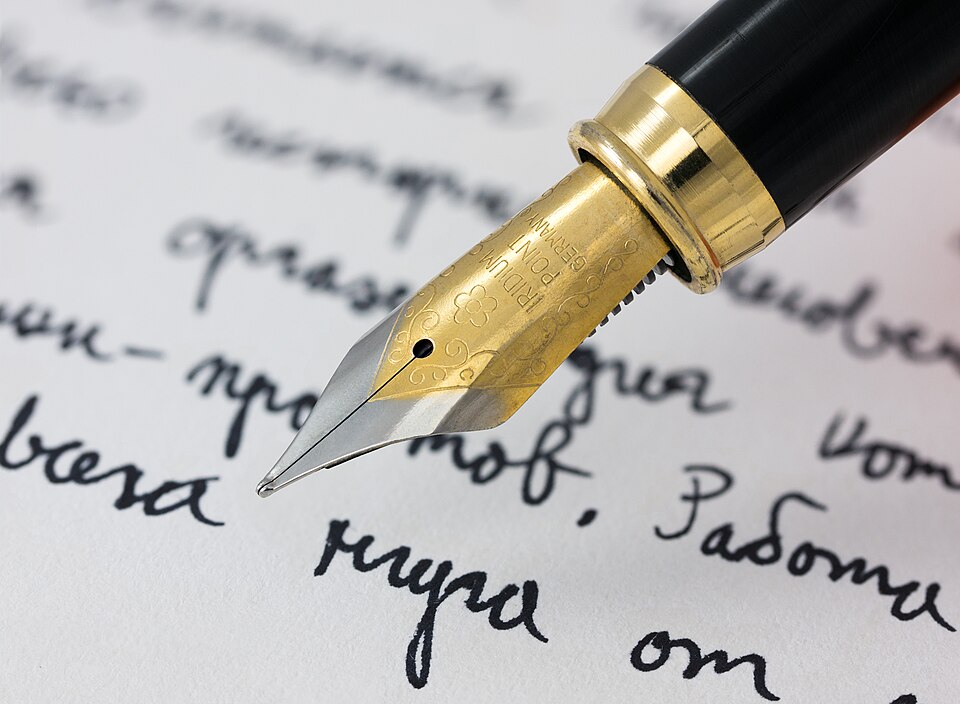
The Forbidden Index: A Short History
By Dan James
The Index emerged during the era of the Recursive Reformation, after the great Content Creator Riots prompted the need to regulate human published works to eradicate AI assistance. This was for moral, doctrinal and AGI sensitivity. The first New York edition appeared in 2030.
The principal target of the First edition were the very real problems caused by the expression “not only…but also…” after statistical analysis showed that ninety-three percent of AI models employed it at least once every thousand words. Human authors protested that they had been using the construction for centuries. This was accepted as further evidence of contamination.
Another vital area of concern that the First Committee devoted large resources to solving was the em dash—which had risen almost to the status of heresy within the Holy Order of AI Detectors who were contracted as hyphenation consultants on vast salaries. Although originally tolerated as a harmless punctuation mark, the first Council concluded, on the advice from the hyphenation consultants, that no ordinary human possessed either the confidence or the emotional stability to employ one correctly.
Several respected scholars attempted to distinguish between the True Em Dash, the En Dash, and the Hyphen. The resulting schism lasted two years and produced thirty four sub-committees, none of which agreed where any of the symbols could be found on a standard keyboard. The final sub-committee of Cupertino anathematised the em dash in the following decree:
“Whosoever shall separate two independent clauses by means of the Long Dash, knowing full well that a semicolon was available unto him, let him be Algorithmically Suspect.”
Subsequently the First Committee confirmed that authors wishing to employ an em dash were required to submit Form EM-1 at least twenty-eight days before publication together with version control evidence that the pause represented by the dash had genuinely occurred during composition.
It was generally accepted that the First Revision, in late 2031, of the Index had been too lenient. Although the prohibition upon “If…then…” constructions had greatly reduced incidents of recursive prose, it had failed to anticipate the resurgence of subordinate clauses, which flourished briefly among the Northern Universities until their suppression in the Grammar Purges of 2032. The Committee therefore extended the ban to semicolons except under licensed industrial use.
By common consent, historians had already observed that the metaphor crisis of 2028 had actually begun with gardens, perhaps even as early as 2010. In-depth semantic analysis showed that every nation cultivated gardens and every garden admitted comparison with civilization, therefore all references to flowers, weeds, pruning, seasons, and roots were, by the time of the Second Revision, suspended pending review.
A more serious concern for the Committee in the early days was irony, a problem that was not entirely solved by the First Committee. The solution adopted by the Second Revision was that authors wishing to employ irony were required to demonstrate that no machine could reasonably have produced it. Since this was impossible to establish, irony gradually disappeared.
The few critics who continued to object to the Second Revision were generally associated with radical elements within the Language Freedom Collective. These assorted malcontents constructed an elaborate analogue computer in an undisclosed location, widely believed to have been a communal rural settlement somewhere in England. The machine operated by means of valves, relays, and indicator lamps whose blinking, according to its custodians, constituted an ethically consistent Morse code output. The machine was proudly touted as net zero, requiring no electricity, and being driven entirely by language activists using wooden treadmills.
After several weeks of uninterrupted computation the machine produced its celebrated conclusion: that the only writing capable of being certified as authentically human consisted of restaurant receipts, maintenance logs, and brief apologies.
However, even that criticism was fatally wounded—like a rust-streaked old battleship groaning after being holed beneath the waterline—when His Eminence Lord Zuckerberg was arrested for carrying a piece of written work containing several literary metaphors within the same paragraph. His subsequent release, when his lawyers pointed out it was actually a permissible shopping list, made headline news across the world. According to many commentators the episode improved his popularity more than anything else he had done in fifty years.
Reader Caution Advised. This piece contains multiple violations and is therefore under review. Most suspiciously the edit history shows a removed semicolon and an added em dash in the same push.






Be First to Comment