
The Concept of Unclean
Jeffrey Meyers
“Cleanliness is next to godliness.”
The concept of unclean begins with disease and ends with death. The biblical laws in Leviticus define leprosy as an unclean disease and condemn lepers to publicly announce their morbid condition in order to prevent contagion: “All the days wherein the plague shall be in him he shall be defiled; he is unclean. . . . And the leper in whom the plague is, his clothes shall be rent, and his head bare, and he shall put a covering upon his upper lip, and shall cry, Unclean, unclean” (Leviticus 13:46 and 13:45). (“Beware! Beware!” in Coleridge’s “Kubla Khan” echoes the warning.) But unclean in the Bible does not really concern public health. Leprosy is clearly a punishment; the walking corpses are guilty and must humiliate themselves instead of hiding from the crowd.
Righteous people must therefore strive to be clean since an unclean state renders them unfit to mention or worship God. Isaiah 6:5 defines words stained by selfishness and pride as impure: “I am undone because I am a man of unclean lips, and I dwell in the midst of people of unclean lips.” In Leviticus 11:7-8 f dietary prohibitions help define Judaism and forbid Jews to eat pork: “And the swine is unclean to you. Of their flesh shall ye not eat.” (A rabbi told me that having pork on the table during a cruise in China was worse than being served excrement.) This idea continues in the New Testament. Mark 5:13 emphasizes the connection of pork with filth and evil when Jesus drives the devils into the Gadarene swine: “And the unclean spirits went out, and entered the swine: and the herd ran violently down a steep place into the sea and were choked in the sea.” (Thomas Hardy’s Far from the Madding Crowd echoes this famous incident when Gabriel Oak’s sheep, driven by a mad dog, rush over a cliff and crash into the sea.) Psalms 19:9 concludes this crucial and persistent subject by connecting purity with righteous terror, “The fear of the Lord is clean, enduring forever.”
The biblical connection between disease and unclean continues in the works of prominent authors. In Thomas Mann’s Death in Venice (1912), a distinguished writer’s infatuation with an exquisite young boy keeps him in that watery wasteland during the cholera epidemic that finally kills him. Mann describes a primitive orgy that smelled of “wounds, uncleanness and disease.” Daniel Defoe’s Journal of the Plague Year (1722) is based on the Great Bubonic Plague, caused by fleas on rats, that killed one-fifth of London’s population in 1665. Infected houses were locked up from outside and a red cross was painted on the door to stigmatize the inhabitants as unclean. Defoe also stresses the connection between infectious leprosy and plague and ritual impurity. Albert Camus’ The Plague (1947) is an allegory of the German Occupation of France in World War II. Influenced by the Bible and Defoe, the sermon by Father Paneloux condemns the entire population as sinful and unclean, claiming that the plague is a punishment for their lack of faith and political collaboration with the Nazis.
Modern writers have used the concept of unclean to denounce anything hateful: the ugly, the perverse and the Nazis. In D. H. Lawrence’s poem “Man and Bat” (1922), the hideous, frightening, well-hung creature “squatted there like something unclean.” In 1882, thirteen years before Oscar Wilde was disgraced, convicted and sent to prison in a notorious trial, his sometime friend and repressed homosexual Henry James disapproved of Wilde’s dress, manner and behavior, and called him an “unclean beast.” In Diary of a Man in Despair (1947), the Prussian aristocrat Friedrich Reck-Malleczewen regretted that he’d failed to murder Hitler when he saw him dining alone in a restaurant. Using the worst word he could think of to describe his political enemy, he recalled that Hitler, “our grim guest, had been unclean and had fouled the room” with his presence.
The meaning of clean is straightforward when Dylan Thomas speaks of “the clean nakedness of light.” But the attractive appearance of the hero in Joseph Conrad’s Lord Jim (1900), “clean-limbed and clean-faced,” disguises his moral failure and cowardly behavior. During a fierce storm at sea Jim, a sea captain, sees his ship is sinking, jumps overboard and abandons the vessel and the passengers. The ship miraculously survives the storm, and Jim is condemned and ruined in a maritime trial.
In his autobiography Sprightly Running (1962), the English author John Wain rejects the puritanical connection of sex and filth: “the expression ‘clean living,’ meaning ‘celibate,’ has the strong implication that non-celibates are living dirtily.” A Shropshire Lad (1896) by A. E. Housman, a repressed homosexual frustrated in his love for his friend Moses Jackson, repeats the idea that having sex is dirty, abstaining from sex is clean:
Oh, when I was in love with you,
Then I was clean and brave,
And miles around the wonder grew,
How well I did behave.
Rupert Brooke, magnificently unprepared for war in his poem called “Peace” (1914), clearly associates cleanness with death and urges young men to sacrifice themselves in battle:
Now, God be thanked who has matched us with this hour,
And caught our youth, and wakened us from sleeping!
With hand made sure, clear eye, and sharpened power,
To turn, as swimmers into cleanness leaping.
Handsome as Byron, Brooke died of an unclean infected mosquito bite on a ship near the Greek island of Skyros in 1915.
The satirist Jonathan Swift thought women’s flesh was literally unclean. In his deliberately disgusting poem “A Lady’s Dressing Room” (1732), the disillusioned romantic lover reduces his once-admired females to an excremental vision:
Thus finishing his grand survey,
Disgusted Strephon stole away,
Repeating in his amorous fits,
Oh! Celia, Celia, Celia shits!
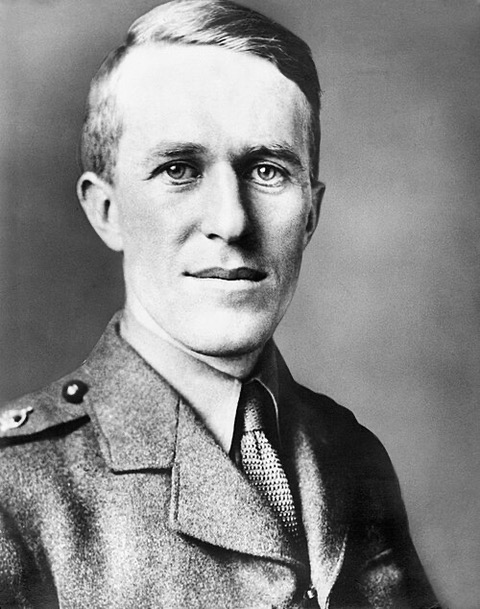
In the Bible, Job is overcome by horrific adversity and cries out, “Let the day perish wherein I was born, and the night in which it was said, ‘There is a man child conceived’ ” (3:3). In a letter of March 1923, T. E. Lawrence, taking this idea to its extreme limit, declares that only death could erase our sexual disgust and guilt, and make us clean: “But surely the world would be more clean if we were dead or mindless? We are all guilty alike you know. You wouldn’t exist, I wouldn’t exist, without this carnality.” Echoing Friedrich Nietzsche, Lawrence not only longs for his own easeful death, but also craves the entire extinction of humanity to eliminate everything that is unclean: “What is wanted is a new master species—birth control for us, to end the human race in fifty years—and then a clear field for some cleaner mammal. I suppose it must be a mammal.”
After his illegitimate birth, his wartime capture, torture and rape by a Turkish officer in Syria, Lawrence confessed in Seven Pillars of Wisdom (1926), that he felt “so stained in estimation that afterward nothing in the world would make him feel clean.” The core of Lawrence’s sexual pathology was his inability to accept the vital processes of sex and birth that are inevitably connected to women, the terrible paradox that man is born between urine and feces, and as W. B. Yeats wrote in “Crazy Jane Talks with the Bishop” (1932), that “Love has pitched his mansion in / The place of excrement.” All the perfumes of Arabia could not hide Lawrence’s Swiftian refusal to acknowledge and endure the physiological facts that provoked t fear of his mother, hatred of his body, revulsion from heterosexual love and masochistic desire for ritualistic flagellation to punish his homosexuality.



Be First to Comment