
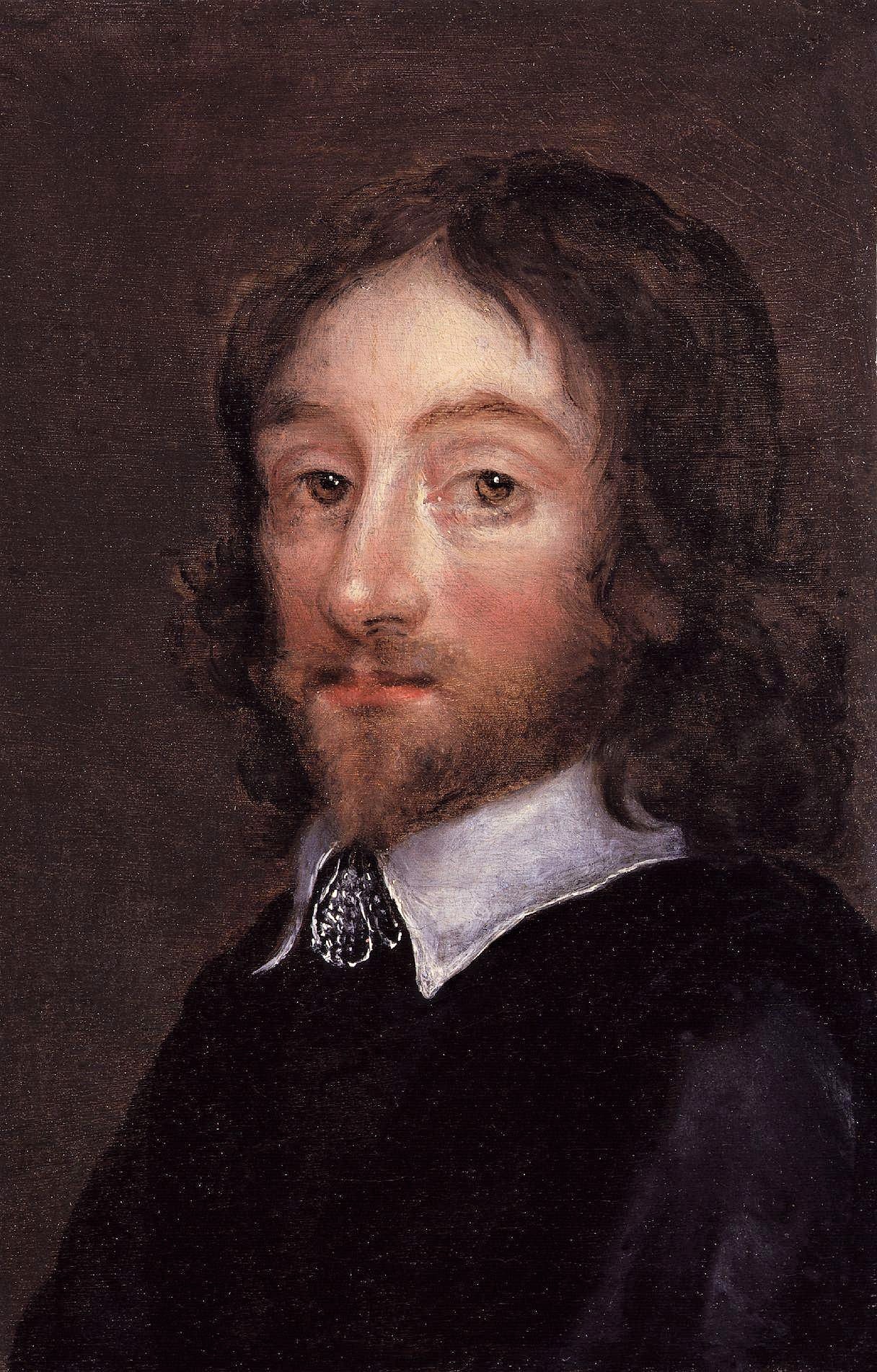
Sir Thomas Browne and The Tender Filaments of Life
by Jeffrey Meyers
Thomas Browne (1605-82), born in London the son of a silk merchant, was educated at Winchester College and Oxford, and studied medicine at Montpellier, Padua and Leiden. In 1629 he toured Ireland with his stepfather and witnessed the ghastly conditions in that country. During the ferocious years of the English Civil War and his lifelong medical practice in Norwich, he married and had ten children, only four of whom lived to adult life. His persuasive testimony in a 1662 trial in Bury St. Edmunds confirmed the existence of witches and hastened the execution of two young women. King Charles II visited Norwich in 1671 to confer a knighthood on the mayor. When the mayor refused the honor for political reasons, Browne, fortunately close at hand, was knighted instead. His son, Edward, became King’s physician and President of the Royal College of Physicians. Browne’s major works, published between 1642 and 1658, with off-putting titles, were Religio Medici (the Religion of a Doctor, his intellectual autobiography and attempt to reconcile faith and science), Pseudodoxia Epidemica (Vulgar Errors) and Urne Buriall (funeral practices and meditations on death).
Frank Huntley’s Sir Thomas Browne (1962) has separate chapters on the major works. Gavin Francis organizes his book, Sir Thomas Browne: The Opium of Time (Oxford, 2023), on vague themes—Ambiguity, Curiosity, Humility and five others—that merge and overlap. Instead of analyzing Browne’s difficult works, Francis offers a series of personal recollections about his own life and medical career in Edinburgh, and the elusive Dr. Browne disappears for many pages. The brief chronology omits major events. A grammatical error appears on 69n and Wagner’s Rheingold is misspelled on 101. Some of Francis’ comments are banal: “Vulgar Errors embodied an attempt to purge his mind of false notions”; “The Garden of Cyprus concerns forms and symmetry in botany.”
Francis writes, “Browne was in correspondence with some of the greatest minds of his day,” but doesn’t discuss this crucial subject. Much more is needed on Browne’s relations with his distinguished contemporaries: the philosophers Thomas Hobbes and René Descartes, the poet John Milton, the diarist John Evelyn, the poet Andrew Marvell, the biographer John Aubrey and the scientist Robert Boyle, the founder of modern chemistry.
Browne is famous for adding many new words to the English language, including electricity, hallucination, ferocious, coma, cryptography and computer. He also invented many words that have disappeared: illaqueation (trapping), lixiviate (separate), nodosity (swelling) and knabble (bite). His style is characterized by ambiguity and uncertainty, obscurity and opacity, inconsistency and paradox. Austin Warren (1951) calls him “speculative, casuistical and sceptical: delighting in accumulating chains of intellectual difficulties, baffling questions, scruples, distinctions and qualifications.”
Like Samuel Johnson a century later, Browne had a great store of learning and “a diligent and unflagging curiosity about everything, and sought to determine the truth of his enquiries by direct observation.” In wacky experiments, he fed glass to dogs and iron to poultry with predictably dismal results, and even kept a hard-to-procure and difficult-to-sustain ostrich. His anatomy of a beached whale, dead for diverse days, was forcibly terminated by the abominable stench of putrefaction.
Johnson’s brief “Life of Browne” (1756) criticizes his inconsequential details, useless information and obscure style: “His exuberance of knowledge, and plenitude of ideas, sometimes obstruct the tendency of his reasoning, and the clearness of his decisions: on whatever subject he employed his mind, there started up immediately so many images before him, that he lost one by grasping another.” Despite the difficulties, Johnson encourages the reader to persist and “follow him, without reluctance, thro’ his mazes, in themselves flowery and pleasing, ending at the point originally in view.” Johnson cited nearly 4,500 words from Browne in his Dictionary.
Browne makes many weird and intriguing assertions. He concludes that manna “from heaven is plentifully gathered in Calabria,” but did not hasten to southern Italy to gather the celestial bounty. In Religio Medici he shockingly asserts that all human beings are cannibals: “We are what we all abhor, anthropophagi. All this mass of flesh which we behold came in at our mouths; this frame we look upon hath been upon our trenchers. In brief, we have devoured ourselves.” The unstoppable father of ten children called sexual intercourse “the foolishest act a wise man commits in all his life” and wanted to “perpetuate the World without this trivial and vulgar way of coition.” One way around crude procreation was his belief, “now common in every mouth, that a woman conceived in a bath by attracting the sperm or seminal effluxion of a man admitted to bath in some vicinity unto her.” This notion encouraged the communal bathing of barren women.
Gavin Francis quotes Samuel Coleridge and some quirky modern writers interested in Browne: the Bloomsburies E. M. Forster, Lytton Strachey and Virginia Woolf as well as Jorge Luis Borge and Italo Calvino. W.G. Sebald’s The Rings of Saturn is “animated and threaded through with reflections, quotations and revelations from Browne’s works.” But Francis doesn’t go beyond these authors and merely offers what he calls “a sprinkling of others’ words to bubble the mixture together.”
Graham Greene took Browne’s famous phrase, “There is a man within me that is angry with me,” as the title of his early novel The Man Within (1929). In the “Oxen of the Sun” chapter of Ulysses (1922), James Joyce parodies Browne’s turgid and obfuscating style: “The tenebrosity of the interior, hath not been illumined by the wit of the septuagint not so much as mentioned for the Orient from on high Which brake hell’s gates, visited a darkness that was foraneous.”
Despite his obvious faults, Browne was capable of great wisdom. In Religio Medici he solemnly declared, “I, that have examined the parts of man, know upon what tender filaments that fabric hangs.”


Be First to Comment