
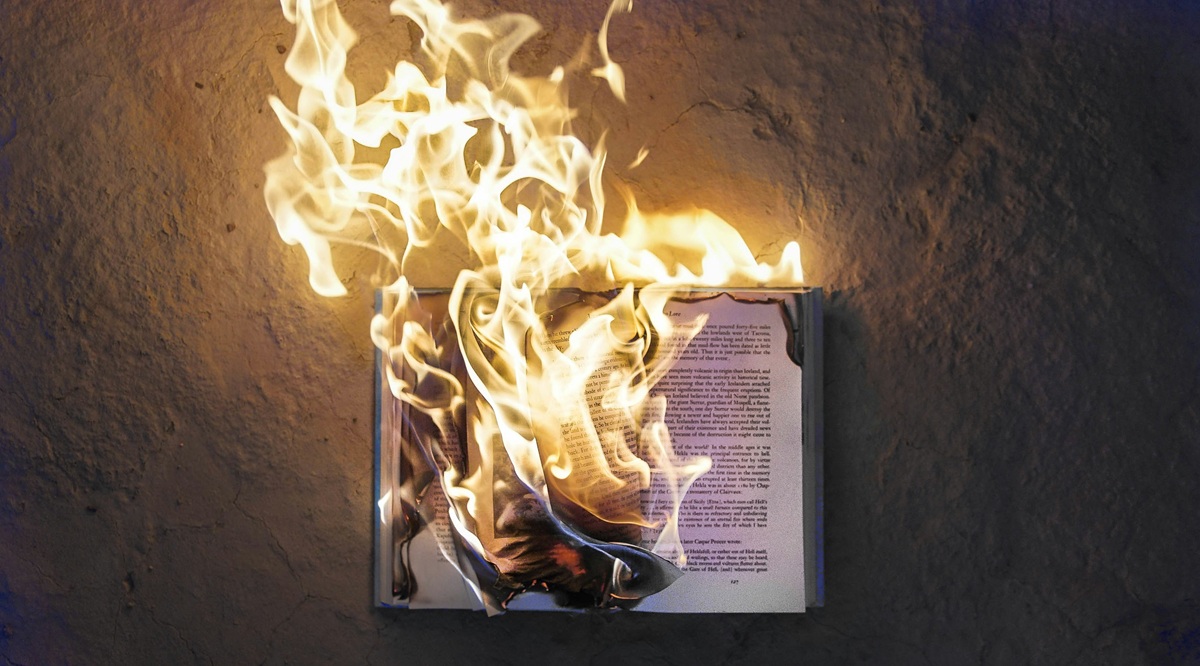
The Department of Literary Security
by Pamela Medve Polivka
Out of all her friends, only Ali did not have the special edition Taylor Swift Life of a Showgirl vinyl. Life was so unfair. Mother said she must wait until Christmas and maybe, if she were good, Santa might bring her latest heart’s desire.
Ailany paused her writing and checked her emails. No reply from any of the 10 literary magazines she had submitted to. She didn’t understand why they didn’t immediately snap up her moving portrayals of American teenagers. She flipped through the latest edition of The Pittsburgher, the top-ranked literary magazine she most wanted to be published in.
Bhuvaneswari inhaled the overwhelming smell of aloo gobi among the many street vendors. The hakeem had told her she must eat more vegetables, but her pati disagreed.
She threw the magazine aside. Yet another foreign story with a bunch of italicized words. She only knew a few foreign words so how could she compete? And there weren’t even any poetic descriptions in that story like “her latest heart’s desire.”
She angrily sent off an email to Fox News complaining about the discrimination the literary magazine was inflicting on Americans. She cc’ed the president of the United States.
As she expected, she didn’t get a reply. But writing the letter had soothed her anger a little. She had forgotten about it when she saw the president on TV, holding up a copy of The Pittsburgher. Stunned, she got off her treadmill and stared at the screen.
“I have received millions of letters letting me know how so-called writers from garbage countries have taken over our most prestigious publications and are excluding our wonderful American authors. That is why I have passed an emergency declaration forbidding publication by any foreign hacks and have created a new bureau called the Department of Literary Security. Everything that’s published and sold in America must be written by American-born authors and be positive depictions of American life. If publishers try to ignore this, the entire staff and writers who dare to challenge me will be deported to Zimbabwe. America must always come first!”
Ailany was appalled. She hoped that her letter hadn’t sparked this, yet at the same time she felt a little glow of pride at the possibility that her words might have inspired a president. She truly was a remarkable writer. And there would be way more opportunities for her now. At the age of 25, she was surely on her way to immortality. A stroke of brilliance overtook her, launching her into metaphor.
Avery felt a kinship with the large oak tree that stood alone in her backyard for as long as she could remember. Despite numerous snow storms that had destroyed lesser trees, the majestic oak refused to fall. Since her parents’ divorce, deer had stripped the tree’s beige bark, and many of its naked branches were spindly. But its trunk was strong.
Most editors complied immediately with the president’s edict, changing out accepted stories for others that fit the president’s guidelines. Those writers who penned essays condemning the policy found themselves jettisoned from families and forced onto planes bound for Zimbabwe. If it wasn’t bad enough that someone had tried to kill Salman Rushdie in America and cost him his eye, now he was being deported. Ailany, who enjoyed Rushdie’s imaginative tales, prayed that her letter hadn’t started this siege. Surely her letter wasn’t the only one. The president had said millions, hadn’t he? Over and over again she regretted ever venting to a president.
Entering into a new year, Ailany wrote nothing as writer’s block drained her creativity and stress frayed her nerves. Then as she was bent over a space heater in her freezing apartment, she opened an email from The Slippery Rock Review telling her that they wanted to publish her short story “Autumn Rain” in next year’s October print edition, mailed to 300 subscribers, and published online. As if new batteries were put into a toy, Ailany came alive again.
“Thank you! That’s so lit,” she said in the email she sent back.
“Just one thing,” the reply said. “Instead of drowning, Eileen should be saved by somebody and maybe go on to get married and have a family.”
Ailany was stunned. The drowning symbolized the townspeople’s helplessness against the AI company buying up the town’s only park and river for its headquarters. If she changed that, the story wouldn’t say anything. But still, she wanted so badly to be published. Did it really matter if she didn’t drown?
After a couple sleepless nights, Ailany decided. She wouldn’t let her story be put through a sieve. She told the magazine she couldn’t change her story but hoped they would still publish it.
She didn’t hear back. Sticking to her principles didn’t feel so good.
Ailany had thought that American authors could flourish now, but the edict to present American life in a prescribed way deterred most respected authors. The Pittsburgher continued to publish, but their stories didn’t soar into the stratosphere anymore.
Still, Ailany admitted with a rare stab of honest introspection, she could write bland like so many of the current stories were. These days she easily recognized what they wanted. She wrote a story about a company’s failed diversity efforts. A mid-size publication immediately agreed to publish it. Then she wrote a fairy tale about a poor but beautiful girl who became a topless model and married the president of the United States. She actually broke through to The Pittsburgher with that one, but instead of triumph, Ailany only felt deep disappointment.
Seeking solace, she was cheered by the multicolored leaves and crisp feeling as she drove to her local bookstore for the first time in months. Wearing a flattering new outfit, she happily took in the appraising glances men gave her. But once she got inside, her spirits plummeted when she noticed that so much had changed. Lining the bestseller shelves now were only American classics like Little Women and Gone with the Wind. Toys and games replaced the table where the featured new books had once been stacked into inviting piles. Despite being noisily crowded, the room felt empty.
She made her way to the literature section where she had found books by some of her favorite authors like Jhumpa Lahiri, Haruki Murakami, and Oscar Hijuelos during past visits. That section had become ROMANTASY as declared by a prominent sign with curlicues and glitter. With a feeling of dread, she skimmed the authors’ bios. After fifteen minutes, she stopped. None of the authors was foreign.
The sight was so alarming that Ailany couldn’t even bear to buy a cookie from the bookseller’s bakery. Her last stop was at the magazine rack where she saw that the literary journals weren’t in their usual spot on the bottom quarter-shelf. Much farther up were the new publications U.S. Fast Food Monthly and American Tax Fraud Tricks.
She decided to try the local library, which had been moved into a mini mall’s long-vacant Nothing Bundt Cakes store next to Yogurtland. Hearing the clanging of weights and grunting, she was shocked to find that it had been turned into a gym.
Ailany longed for something new and stimulating to read. She desperately needed a mental visit to another land without dragons or Vikings. With her close friends being more TV and movie watchers and Amazon having severely slashed its book inventory, she sought help from her former neighbor, Laverne, an older British woman who was a librarian before she was laid off years ago. Ailany remembered the layers of books that used to line her home shelves and hoped that she could borrow a few of them.
But when she arrived at Laverne’s apartment, the immense bookcase wasn’t there, a faint outline on the wall the only verification that it had existed. In its place was a small stand awkwardly supporting a vase of fake flowers.
Hesitating, Ailany mustered her courage. “What happened to your books, Laverne?”
Her friend looked haggard, her hair limp as if it hadn’t been washed in days. Alarmed, Ailany remembered how her hair used to look as if she had gone to a salon every week. Laverne put a finger against her lips before unplugging her Alexa. “They came and took them,” she whispered. “They said my books were subversive and they’d send me back to England if I didn’t give ’em up.” She sadly scanned her apartment, which smelled of unemptied garbage. “Maybe that wouldn’t be so bad. I don’t even like living here anymore.”
Ailany returned home depressed and vowed never to get like Laverne, slovenly and sad in her smelly apartment. She vowed to get through this alarming period as positively as she could. After finishing a box of chocolates, she turned on the TV news, which only had reports about American football games, the latest plane crash, and the president’s daily proclamations and the acclaim that followed. The news never covered anything going on in foreign countries anymore. She wondered whether the wars in Iran and Gaza were finally over and how Ukraine was doing. She switched the channel to a Lifetime movie.
The sassy interchange between the waitress and the millionaire felt dusty as she’d heard words like this too many times before. So she pulled out Lahiri’s The Namesake about immigrants struggling to assimilate in America and moved to the couch. Absorbed in Ashima’s efforts to approximate a Calcutta street snack with Rice Krispies and Planter’s peanuts, she was jarred out of her reverie by a furious knock on the door.
“Department of Literary Security!” a male voice thundered. As Ailany tried to hide the book, the agent in full military uniform opened the unlocked door and thundered into the room, snatching the book from her hands.
“Jay Humpa La… What kind of name is that?” he said, his voice muffled under his face covering. “Foreign, I bet.” He scanned the cover, shaking his head. “Why are you reading this garbage?” He demanded to see the rest of her books. Afraid of the gun hanging off his belt, Ailany meekly guided him to her bookcase. He didn’t bother to inspect the bedraggled editions before throwing them all into his canvas bag.
“I’m an American citizen! Why are you here?” Ailany squeaked, trembling.
“That’s classified,” he said. He handed her a paperback book. “If you want to read something good, read this.” It was The Art of the Deal, a one-time bestseller that Ailany had already read years ago and hadn’t thought much of.
“But I wrote the letter! The letter the president was talking about when he created the Department of Literary Security.” Ailany flushed.
The agent laughed. “Lady, do you believe in Santa Claus too? He doesn’t have time to read any letters. This is all part of the plan his people came up with years ago.”
He demanded to see Ailany’s driver’s license and passport and closely scanned her face.
“You look American and talk American so I guess you can stay for now,” he muttered before leaving.
Afterward, Ailany’s head throbbed. Like Laverne, she no longer wanted to shower or clean her apartment. But she had to work to survive so she forced herself to look as presentable as possible and took Benadryl to try to relieve the anxiety attacks that zagged through her body daily. They were so unbearable that she even contemplated suicide until her co-worker, Tasha, offered to sell her stronger pills, which she had gotten from her sister, a medical intern who could write prescriptions. They were expensive, but kind of worked so Ailany kept stretching her budget to buy them, even though they left her feeling hazy.
Sitting in the breakroom eating lunch, Tasha shuddered as she pulled on her coat.
“How are we supposed to work when they won’t turn up the heat?” She gazed out the small window, watching thick cords of rain slam to the earth. “What’s with all these storms, Laney? We never used to get storms like this.”
Ailany shrugged. “They’ll pass.”
“You think it’s climate change?” Tasha whispered. “Climate change” was on the manager’s list of forbidden words and phrases.
“Of course not. It’s just a weather cycle, been going on forever.”
Tasha paused, frowning, then brightened. “You look great by the way.” Ailany’s newly blow-dried hair smelled of jasmine, and her nails were painted a pale pink with a tiny rhinestone on her ring finger.
“Thanks! Hey, you want to come over and watch ‘Escape from Love Island’?”
Tasha shook her head. “Naw, not tonight.” She looked around and bent her head, facing away from the room’s camera. She whispered, “My sister got some foreign books, a new one by Salman Rushdie you could borrow. I know how you love him.”
Sparks flew up Ailany’s body but drifted into ash. “You read it first.”
After she got home that evening, she opened her bag from McDonald’s and squeezed into her chair to watch her favorite reality show. But the program was preempted by the president speaking in front of the gilded mantelpiece in the Oval Office. Ailany didn’t get angry about the office’s ostentatious display like she used to every time she saw it. Biting into her Big Mac, she let the blazing image wash over her as if it were ocean waves, imbuing her with a sense of calm. How hadn’t she realized that the shininess did jazz up that somber room. She welcomed the president, wanting to collapse in his arms.
Pamela Medve Polivka is a writer from the Los Angeles area. Her fiction has been published in Calliope and Bloom. A former journalist, she moved into marketing and became a copywriter for home entertainment and streaming services.






Be First to Comment