
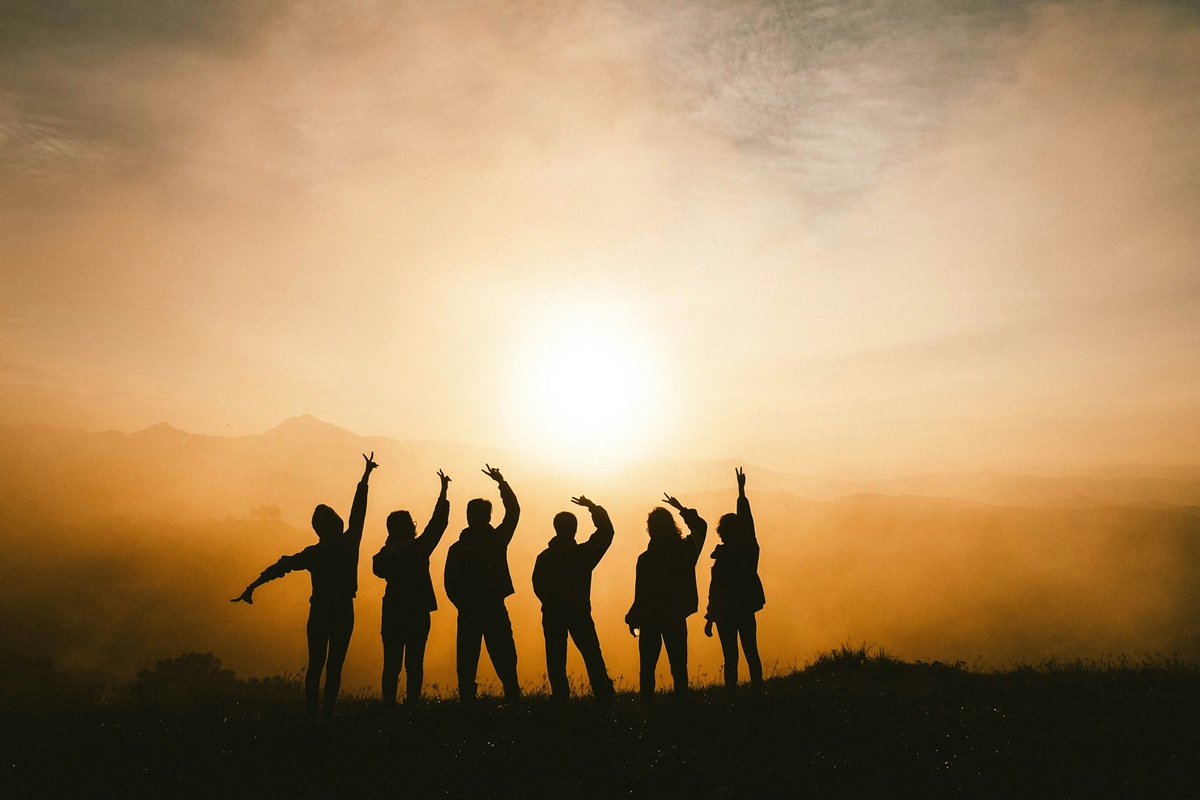
Gather
By Casey Alexander
The team sat clutching their drinks, poised to receive the first question: “Legally, what made something a cough drop?”
David stared helplessly at the basket of popcorn before him. Happily, it seemed that nobody knew; there were a few murmurs but no answer forthcoming.
Trivia night with the guys from the office. After hours, but also work of a sort. For David, there were dangers inherent: being dismissed as an idiot, falling off of his stool. Even here, he was haunted by the need to produce—timely answers and clever remarks in this case.
The questioner marched on: author of a sitcom theme song, batting average of a departed first baseman. Helmet shape in the Battle of Hastings. David sifted through the detritus of his mind but found nothing. He shrugged good-naturedly at his workmates. They didn’t know each other per se though they’d shared a great many tables.
There was a lot of laughing with intensity beneath it. In addition to the thrill of winning, there was a t-shirt at stake.
The others got several questions, but he alone knew that limnology was the study of lakes (the only thing he remembered from high school biology, apart from the rumor that the teacher lived in a tent in his brother’s backyard). A deep breath out; he had done his part for the evening.
Two hours and several drinks in, a heated exchange between tables: they were arguing about whether or not Renoir had been in an iron lung. The questioner had the wrong answer, a red-faced fellow insisted; his team demanded that the question be thrown out, the point deducted from the Belted Warriors’ score.
The Warriors shouted back. “Get rid of them!” one of them cried. Confirmation involved the illegal use of a phone, so the Party Hats should be disqualified. Banned from the bar for life, possibly punched in the face. The altercation went on for some time (Renoir aside, it was an excellent way to unwind).
In the end, both teams were disqualified for threatening behavior and stormed out into the street. What remained was a sort of boycotted Olympics; David’s team defeated the one other group in the room.
Around eleven, he shambled into a dark apartment. Dispirited by the turn of events, he threw the t-shirt on a chair.
The next morning at work, the incident was still on his mind. It was the absurdity of it, the pettiness of the whole thing. And the fact that these outbursts happened so often. Arguments about nothing seemed to be all around him. He felt a sense of unease.
Made worse by a second disturbance—a dressing down from the boss.
The organization sold a peculiar product—a credential for social workers. Candidates sent in a stack of documents and a thousand dollars; they received a handsome certificate with a gold seal in the corner. Which reassured somebody, somewhere, or covered a crack in a wall. David’s role was recruitment—locating those who might find the paper attractive.
He’d organized a mass mailing, but the scheme was a bust: sacks of letters rejected, returned. The addressee was departed or had moved out of state. Seeing this, the boss suggested he alphabetize the dead letters; this would streamline the removal of names from the database (and give David something to do).
He set about making twenty-six piles of garbage. This didn’t need to be happening, surely. He’d had the same feeling during the Party Hat clash. That he was in the wrong place, that the wrong things were happening.
It had been this way for a while. The job was getting to him: the canned pleasantries, the circular speeches. A hundred deadlines each day. Some unpleasantness ahead of him always. He spent his life getting through things, trying not to be late, trying to meet minimum standards. Steeped in noises, riled up for no reason. Chasing what didn’t need to be caught.
Along with everyone else. No, it wasn’t just him, and it wasn’t only the job. The whole arrangement was off. The made-up problems, the strained interactions. There was an emptiness to it; tremendous effort going to waste.
He was weary. Homesick though he’d never lived anywhere else, anyplace besides Boston.
David took a deep breath. None of this would be happening if he were on a hillside, grazing. As was his natural state. Recently he’d read a book on the subject. It explained that he was much, much healthier once, a million years ago, before he cracked up and began planting seeds. What followed was settlement, a chain of mistakes; humanity had been careening downhill ever since.
And had clearly hit bottom, he thought, considering the sad envelopes. He wondered what it was like to dash about in the sunlight, gleefully gathering nuts. Things must have been fabulous then. Thoughts of this illustrious past helped David make it to five.
Home again, he sat in an easy chair, leafing through the book that described his decline. Yes, he was a hunter gatherer once, part of a glorious tribe. At some point in history, he had ceased to be real. By nature, man was unsettled; agriculture and housing had dragged him away from himself. His lot got worse with every misguided invention: movable type, the light bulb, penicillin and the faucet.
In these circumstances, the mind had run amok, hurtling through space and time. Relieved of the need to survive, it was free to pursue other interests: making radios, starting wars. Worrying about every gesture, wondering what it could mean.
Captivated, David read on. Man’s focus had shifted to the procurement of trophies and cows. To being better than someone and to not dying in style, for as long as he could. Deprived of hardship, humanity had begun dreaming: seeing things that weren’t there and wanting what it didn’t need.
A fine explanation, he thought: having secured a reliable food source, he had more or less gone berserk. But what a terrible shame it was! Wandering for this long and not knowing what to do next. Could nothing be done about this?
It would be hard to undo all the damage—to abolish the city, to replace the masses with a more tasteful, dispersed population. But maybe he could adopt some of his ancestors’ ways.
David reflected on this as he reheated an egg roll. One thing was clear: he ought to be running around. He ran on the treadmill twice a week at the gym, but with a lack of conviction; it would be better if something were chasing him. He wasn’t sure how to arrange this. As for the gathering aspect, he wondered if rifling through garbage might have the same benefits. Possibly, he thought, but something essential was missing. According to the book, hunter gatherers flourished in tribes.
Not having one, he’d flourished less. His attempts at dating had been rather feeble, and other men were always trying to beat him at something. He only saw his parents on holidays (they were proud of how busy he was). In fact, he didn’t know anyone who had a tribe; the whole setup seemed to have gone out the window. As a result, the present was like a congested highway: everyone was in their own car, fighting to get ahead though no one knew where they were going.
In the old days, they were united. One people with a single objective, which was continued existence. Their movements were necessary, noble, driven by hunger alone. Which was a better emptiness: easier to trace, easier to relieve (at any rate, for a while). The great mistake lay in thinking that there was something beyond this. He envied them through two cooking shows and a film about Devil’s Island.
As he fluffed his pillow, an inspiration struck him. Why couldn’t he form such a group?
Nature, though bruised, was still there; maybe others were feeling like he was and would be happy to join him. The more he thought about this, the more fantastic it seemed. He barely slept for the excitement.
***
For days, David lived joyfully within the idea. Firstly, he had to assemble the group. He considered recruiting online, but thought better of it; technology had led them astray. Instead, he put fliers on telephone poles (wood on wood, a step in the right direction).
The green sheet read “Return to vitality: Leave the errors behind. Splendid health and contentment to be found in the woods. Hunter gatherer tribe revival.” Interested parties should meet at the library on the following Thursday for an informational meeting.
The turnout for this was impressive: a sizable crowd staring in his direction. David cleared his throat. “How would you like to go home?” he said in a shaky voice.
The attendees looked at him blankly. Did this mean that the meeting was off?
“To your real home, I mean,” he said quickly. “To our real home.”
Before they could answer, he launched into his presentation. Quoting from the book, he outlined the problem. The fact was that humanity had gone to seed. Fortunately, there was a way to reverse this.
He had some green paper left over, so he’d made drawings to aid him. Humble, yes (stick figures mostly), but poignant: a man at a desk with his head in his hands; a man in a popular restaurant, frowning and sitting alone.
“Could this be you?” he asked, holding them up for the crowd. They laughed but admitted it could be.
At this point, he held up a drawing of the man running around in the sunshine, surrounded by flowers and trees. Judging by his smile, his mood had improved considerably.
The drawing represented man in his natural state. “Notice how well he fits in,” David said. “This will be all of us soon.”
He explained the basic idea. They would reestablish the tribe, return to their home in the woods. Focus on life preservation, leaving all baloney behind. He spoke of unlimited bounty, of a seamless connection with nature. And more importantly, with each other. The last drawing featured the man and several companions, smiling and holding hands. He’d written “Togetherness, trees” at the bottom.
The audience was skeptical but intrigued.
“How much is this going to cost?” somebody asked from the back.
“We won’t need any money,” David replied. All they needed was a place to spread out.
But where could they go where they wouldn’t be in somebody’s yard?
There was a place in central Maine, he said: a large swath of public land set aside for recreation. “Which is perfect if you think about it,” David went on. Their aim was to re-create, to recover what they had lost.
Which was their health and their minds. Too much thought had led them into the current morass, but there was a way out.
In the woods, conversation would be pared down to the essentials. When relations consisted of “Help me carry this log,” there would be no misunderstandings, and conflict would disappear. Furthermore, with nothing to fuel them, excess thoughts would die out, disintegrate like fallen leaves.
An older man raised his hand. He had a blood pressure issue. Would they have a mailing address where he could receive medication? He also had a physical in November; could he leave and come back?
David sighed. This wouldn’t do: how could he find them again? He told the man that his blood would be better off, that the problem would disappear once he got to the woods. The hunter gatherers were supremely healthy (having a baby or being one would almost certainly kill you, but this didn’t apply in his case). In nature, he said, they would drop at the appropriate moment.
Over the course of an hour, David promised the moon: resplendent and theirs, unobstructed. He made an impassioned case, but for the most part, he didn’t need to convince them.
Twenty-five people attended; seventeen remained. Two walked out when he said that it wasn’t a cult (a woman convinced that it was; a man disappointed it wasn’t). The older man nodded politely and left.
A few had read the same book about hunting and gathering. Many were eager to leave things. Moribund partnerships, dimly lit offices. A sticky seat on the train. But it wasn’t just this. There was something they missed although it had never been with them. A barbershop, or a bowling league. A staircase where everyone gathered. Camaraderie lost with the passing of time. Could they recover it in the woods, in a place without walls or a clock?
The notion was drastic, delightful. Going with him was crazy; not going was crazier still. They filed out, elated, dreaming of easier days.
***
Those who’d said yes met again to discuss the particulars. Hunter gatherers didn’t plan, David said, but they needed to get the ball rolling.
All of them were eager to do so. Jane longed for a life without plastic nametags, without passwords, locks or keys. Elaine was tired of people being tired of her. Marcello was fleeing a customer service position (he was sick of getting beaten up over the phone).
Mark was unsatisfied with his shoulders. He went to the gym every morning, but they had failed to respond. He needed a life that was exercise only, vigorous and sustained. Plus he was between jobs.
Anthony thought the arrangement might be good for his health. He had a litany of medical issues that nobody would confirm. He also thought the experience might add to his acting. Thus far, his only credit was “Man in Neck Brace” in an ad for an accident lawyer.
In two years, Maria had signed six contracts that said “You are not an employee. This is not a job.” Independent contractor, tenant at will, untitled romantic companion. A thousand good jokes, a thousand kind gestures, a thousand skillful decisions might be enough to secure a position somewhere (at a real company, or with a real person). But she was tired of being measured, of the relentless auditions. She liked the idea of a permanent role, of a part that they couldn’t recast. A sort of civil service position, but in the personal realm. Here it wouldn’t matter how competent she was, or how charming; she would be one of the tribe, accepted by virtue of being.
With great excitement, they hashed out the details. There would be a period of transition, during which they could use things they’d later phase out. Knives, boots, flashlights and so forth.
Should they bring something to eat, or would refreshments be everywhere? After some debate, they settled on a sack of walnuts. This would help to sustain them for a couple of weeks until they established their diet.
It came to light that no one was willing to kill things. Hunting, it seemed, was out. “No problem,” David said. “The gathering will be enough. We’ll have the whole forest to work with!”
Mark didn’t know how to work with a forest (he could identify tulips and roses, maple trees and grass). “Should we bring a field guide or something so we know what’s what?”
“Our ancestors,” David said reverently, “didn’t know what a field guide was. Or any book for that matter.” Reading had harmed them enough as it was. Use of the internet was also out of the question, so they wouldn’t bring phones. Instead, they would read their surroundings, taking cues from bird calls, the taste of the wind, maybe the light of the moon.
They voted against bringing utensils and dishes: two pots and a wooden spoon would be more than enough. A shovel, a couple of knives, and a nutcracker to be shared; a single bag with a jacket and a few other essentials. Nature would furnish the rest.
“Will we be sleeping in tents?” someone asked.
“It isn’t a camping trip,” David said coldly. “We’ll be sleeping in nature. Our genes will choose the location.” He was quite confident in them. According to the book, he had genes for hut making, for mushroom identification, for sleeping on the ground. Surely they’d express themselves once they were given a chance, once he’d shed the blubber of urban life.
They discussed nudity and mutism as possible goals for the future. The latter appealed to Marcello, who spoke at some length about the problem of language. It was a short trip from language to thought, he said, and then from thought to despair. Language was a font of confusion; it was the reason his jokes died on impact. They should dump it immediately (if not sooner).
He volunteered to lead by example, going silent as soon as they got to the woods. David thanked him and said that they’d all talked enough for the moment. Leaving the library, the gatherers shook hands with spirit. In three weeks, their troubles would be over.
The next day, David gave notice to his boss and his landlord. Such a joy it was to tell them that he was going home.
***
Monday, the twenty-seventh of August. Five cars, one of them David’s, made the four-hour drive to Maine. On the way, they stopped at the House of Pancakes for a motivational brunch. The conversation kept dying out, but this didn’t disturb them. In nature, they would coalesce; there was no doubt about this.
They pulled into a rest stop to use the facilities. There were no restrooms in the woods, David said cheerfully. They could rest wherever they liked.
Finally, it was before them, spectacular and vast. David had looked at a map; there was a river nearby. They might as well find it, he said, and then proceed from there. Parking the cars, they plunged into the forest, following his lead.
The afternoon was a delicious one. Blazing days at the end of the summer; everything at the height of its charm. They’d hiked for twenty minutes, vaguely aimed at the river, when they spotted some crab apple trees. Six or seven growing together, full of tiny green apples.
“Fortune is with us, my friends,” David cried. “Imagine finding this right away!”
Elaine examined the trees. “They’re crab apples,” she said. “I don’t know if people can eat these. I saw a horse eating one once.”
“I think he had the right idea,” David said. He seized an apple and bit into it, swallowing with some effort. The sourness was stunning, but he tried to act pleased. No, not sour, he thought. Bracing. A nice change from sugary fakeness.
Anthony studied the dusty fruit. “Shouldn’t we rinse them off or something?”
“Of course not,” David replied. Washing fruit, washing at all. This was the kind of silliness that they wanted to shed, he explained. Sanitation was part of his sorrow; grime was underrated as a promoter of health. For this reason, he said, he was looking forward to ingesting more dirt.
But there would be time for this later. The river was calling to them, asking to be found. Ten minutes later, they happened upon it. (Fortunately, you couldn’t miss it; it cut across the whole area). A marvelous, impossible sight and a sedative sound. The group stood silently, watching the water rush by. When the effect began to wear off, they wondered what else was around.
David suggested they make their way down the river; there was a lot more to see. As they moved, the freshness of everything struck them. The silver and green, the white and the blue and the gold. Everywhere, they absorbed it, let it wash over them. Freedom, peace, a scenic walk with the river beside them; what else could they possibly need?
They made their way back around sunset. There was a clearing near the crab apple trees. The perfect place for a circle, for friendly communion at the end of the day. Work would begin in the morning; this evening, a homecoming bash.
It wasn’t cold, and there was nothing to cook, but a fire seemed called for. None of them had ever made one, but they knew it involved a circle of rocks, a pile of twigs and a hearty log or two. All of which the forest provided.
David had brought a lighter for the transition. (In time, they’d figure out how to start fires by beating rocks together, or by waiting for lightning.) They gazed into the flames, marveling at their good fortune. A light and lovely dinner: two apples and a handful of nuts. Rose light before the night came down.
A great celebration around the fire: they told jokes, sang Country Roads (even Marcello consented to hum). Now that they were home, this warmth would always be with them.
When they got tired, some piled up leaves for a pillow; some lay on their folded hands. The ground was hard and uneven, but there was value in this: too many cushions had eroded their natural strength.
***
At six o’clock, the sun woke them up. Sore and disoriented, they didn’t talk for a while. Past “Good morning” and “How did you sleep?”, they didn’t know what to say. They smiled at each other instead, or pretended to be taking in the surroundings. Breakfast, two apples and a handful of nuts. Water from the bottles they brought. (Eventually they’d drink from the river directly or open their mouths when it rained.)
Anthony had a raging sunburn, so he’d spend the day sitting under the trees.
“That layer will come off,” David assured him. “We’re made to live in the sun.” After all, he said again, the body was an all-weather item: waterproof, windproof, resistant to heat and to cold.
He tied the sack of nuts with a shoelace and placed it in the crook of a tree.
“Let’s fan out and see what we can find.” They split into smaller groups, agreeing to meet for dinner at sundown.
They wandered through the woods, not deviating far from the river. David’s group wasn’t searching in earnest; it was more like window shopping. As they saw it, the forest was teeming with edible items, like a salad bar or a buffet on a cruise. They waited for a signal of some kind. Poisonous leaves would radiate evil; safe ones would glow or move to salute them. Nothing was calling them so far, but it would when their senses adjusted.
David looked at his watch (another transition item). It was nine forty-five. They’d spent three hours examining leaves, trying not to trip over things. He suggested they sit for a while. This, he figured, was when the connecting took place.
“What’s with this tree stump?” Elaine asked, sitting down next to Maria. “It looks like something ate half of it.”
Was this an actual question? Nobody was sure. The bonding session was off to an unpromising start.
Stretching, the gatherers made a few breezy remarks: variations on “Isn’t it beautiful here?” and “Great to be away from all that!” They merrily recounted the horrors of their previous lives. For the moment, it was enough not to be there.
For the rest of the day, they wandered and sat by turns. Farther down the river, Mark’s group took a different approach. They zeroed in on attractive plants and attempted to eat them.
A robust vine caught their eye: blue berries on red stems within a profusion of leaves.
“I think they’re blueberries,” Jane said.
“They might not be,” Mark said. “What if they’re poisonous?”
“I doubt they are,” she said, running her thumb over the fruit. “See? That bird’s eating them. That ought to count for something.”
“Anyway,” Mark said, “You’d have to eat like a million of those to get anywhere.”
Jane picked one and ate it. “They’re not blueberries,” she said, grimacing.
For the rest of the afternoon, her stomach was turning over. She reported this to the others when they reconvened.
The gatherers were rather spooked by the news. For now, they would stick to plants that they knew to be safe, such as the dandelion (David had eaten one as a child and lived). Other things would reveal themselves once their genes had warmed up. Sustenance was all around them; it was a question of learning to see it.
Beyond this, little was said over dinner (two apples, a ration of nuts and a handful of dandelions—golden flowers and greens). Their bodies were well used and resting, glowing from the exertion. Someone asked if it was bedtime.
“Not yet. We’ll go to sleep when it gets dark,” David declared.
Mark considered the statement. This meant that in winter, they would turn in at 4:30pm. What would they do with fifteen hours of darkness? He wondered but didn’t raise the concern; by then, they would be integrated and everything would make sense.
***
On the third day, the gatherers woke up soaked. Those who had managed to sleep. The rest had heard the rain beating the leaves above them, felt it roll onto their faces.
“This is great,” David said, blowing into his hands. “We’re made to live in the rain. It’ll help to build our resistance.” The weather had turned, he said, but the gathering should take place regardless.
Waterproof as they were, no one wanted to do it. They huddled under the crab apple trees, shivering and scowling. Dreaming of tea and a bathrobe, of central heating, dry socks. All of them longed to be elsewhere, and all were ashamed of the thought. Meanwhile, they envied the others’ resolve, their stoic approach to the thing.
Mark wiped the rain from his glasses. In the city he wore contact lenses, but this required a sink and a mirror along with the cleaning solution. He was strong but myopic, not as fit as he could be to survive in this setting. Even the glasses were a violation of nature: the fact was that he was defective and ought to be eaten by something.
Bored and wanting to move, Jane agreed to a brief expedition. She and David tramped through the mud searching for dandelions. He was glad to be alone with the girl, having noticed her at the meetings, but she was single-minded about it, focusing on the flowers and barely looking at him.
They returned with a heap of greens (Jane refreshed by the outing, David gloomier than when they left). She distributed the wet plants, happy to make herself useful. An early lunch was in order since there was nothing to do.
They passed the nutcracker around; the sight of it reminded Jane of the ballet. Her mother had taken her when she was seven or eight, on a freezing night in December. She remembered the silk on the walls, the velvet dress that she wore. The rise of the violins when the nutcracker turned into a man. She got a bit lost in the story, but the telling was spellbinding.
Wet and disheveled they were; the crab apple trees were a lousy umbrella. The gatherers wished for something more solid, but any shelter they made would become a prison of sorts. A cave would be acceptable, they thought, but they hadn’t seen any around. Even if they found one, what were the odds that it would be vacant? Surely they had no right to evict the bats, etc., which were already living there.
They shouldn’t make a nuisance of themselves; in the forest they were last among equals. It would take time to build a rapport with the neighbors, most of whom hadn’t stopped by. The insects had taken a passionate interest, however. There were bears in the area, but this was nothing to fear; they were always so affable at the zoo. If a bear happened by, the visit would be a brotherly one.
As the day wore on, they tried to talk, tried to laugh, tried to sleep on the wet moss. Lit and relit the fire. Maria fought a growing desire to scream. It was the rottenness of it—the squelch of every step, the sliminess of the leaves—combined with the lack of relief.
***
Mark felt like something had run over him. He wasn’t dead, surprisingly, though he’d barely closed his eyes. The rustling, the howling, the snoring; the fact that no matter how he lay, there was a rock underneath him. And something trying to land on his face.
They managed a grim good morning. The skies had cleared overnight, but the temperature had dropped to forty-seven degrees.
After breakfast (two apples, a ration of nuts, and a few leftover flowers), they set out with a new urgency. Today, something would need to be found.
At first, the light diet was charming: a reset for overtaxed systems, in keeping with a simpler life. They’d cut the fat happily, in this and in all things. But not without controversy. Within them, a counterrevolution was brewing.
David strode purposefully through the woods, leading his group to the river. At least they had plenty of water even if it tasted like dirt.
The river was shallow in some spots, deep and raging in others. Full of mud, breathtakingly cold, hard to get in and out of (Marcello fell every time). They’d expected clarity, refreshment, a gentle current to guide them. And a sort of jacuzzi to bathe in (for those who valued the custom). Grimy as her hair was, Maria couldn’t bear to put her head in the water. Kneeling on the bank, she washed her face and her hands.
Clearly they should be doing something, but they didn’t know what it was. As always, they waited for David to give them directions. He didn’t like leading, but he was de facto commander, having set the thing up.
With great concentration, the gatherers studied the plants. They must have been missing something. Maybe the forest was like a poem; they’d understand what was in it on the fiftieth read.
Inspired by a childhood field trip, David thought they might find maple syrup. He’d stabbed several trees to this end, but so far had come up with nothing. He vaguely recalled that the trip took place in the winter, but figured this wouldn’t make any difference; a tree was basically an enormous bottle, so the sap should still be there if no one had taken it out. This year, sap season would carry on: now that they were reunited, nature would meet him halfway.
What else might be edible? The group examined the options. Mushrooms were everywhere, but these seemed eager to kill them. Possibly acorns, but they were too hard to chew up. Maybe if they stepped on them first. This would involve wearing shoes, though, so it wasn’t a long-term solution.
“Maybe we can crush them with rocks,” Maria suggested.
“Maybe we can find a beehive and get some honey,” Elaine said.
“Maybe we can organize a picnic on the highway,” Anthony said darkly, leaning to stay in the shade.
Marcello had several ideas that he couldn’t convey; he drew pictures in the dirt that nobody understood.
“Don’t worry,” David assured them. “We’re hardwired for this.” The statement appeared on practically every page of the book, so he assumed it meant something.
By now it didn’t feel true, but they were eager to believe him. They’d given up jobs and apartments, had put their belongings in storage.
Some distance away, Mark was digging holes in the ground, hoping to unearth a potato. A woman named Ivy was sneezing profusely.
“Must you make that sound?” he asked.
“What sound?”
“That high-pitched squeaking sound.”
“What are you talking about?” she said. “I sneezed. That’s just part of the sneeze.” As it turned out, she was allergic to everything green and sneezed whenever the wind blew.
“I don’t think it is part of the sneeze,” he said. “I think you’re throwing it in at the end for some reason.”
When asked what this reason might be, Mark was stuck for an answer. Nevertheless, the theatrical flourish was chipping away at his nerves.
Jane frowned at the piles of dirt that were appearing around him. “We should be eating legumes,” she said firmly. The soybean was of particular interest.
“We haven’t seen anything like that,” Mark said, kicking at a root. “Anyway, you can’t just eat a soybean. You have to ferment them or something.”
“You just boil them,” she said drily. She wondered if she might find more on her own.
Across the forest, the gatherers were restless. Seven more hours of daylight. This time, a tremendous ocean that they were floating around in; a person could only stare at a leaf for so long.
Especially in this condition. Mark felt like he’d been hollowed out. For Maria, it was like someone pulling her sleeve. David felt it whenever he breathed, like something was eating him. They had felt this unpleasantness, briefly, but relief was always at hand. Here it was like a houseguest, haunting them night and day.
The groups compared notes over dinner (gatherer salad again). Sadly, surprisingly, there was nothing to add: up and down the river, the plants were the same. Dandelions and grass, a few more crab apple trees. A lot of maples and pines, bushes that could have been anything. There were no strawberry patches, no giant ears of corn.
The gatherers slapped themselves (they were besieged by mosquitoes at sundown). They talked about moving on, about going farther afield. But they were afraid to leave the crab apple grove. It wasn’t a settlement, mind you; merely a reference point.
They slept in their boots, in all of the clothes that they brought. The chill was a promise that would be kept. It was still summer for a few hours each day, but the window was shrinking.
***
Elaine lay awake in the darkness, trying not to cry out. Something had stepped on her hand, shaking her out of a fragile sleep. She couldn’t see anything. There were no stars to be seen, no moon; only the gloom of the night. Was there anything there? It was hard to tell what was real, what was delirium or a dream. Her mind went to a thousand frightening places. If only she had a lamp to turn on, or somebody to talk to. (Several of them were awake, lying in silence, fighting the night on their own.) Elaine took another deep breath. She tried to focus on what was safe and familiar: the elastic cuffs of her jacket, the back of her hand on her cheek. With effort, she weathered each second.
At least she had a friend in Maria. She could wake her up as a last resort.
***
Maria was trying to hide, hoping for a minute alone. Elaine was calling her name. A voice that went through her like a lance.
“Do you know what I can do about this?” she demanded, coming upon her. “My socks keep falling into my boots.” This kicked off an indictment of the socks, the boots, international commerce, offshore incompetence, disastrous trade deals, pea-brained governments and a time in which nobody could be trusted.
She gravitated toward Maria. Always fuming, forever beside her. There was a lot to lament: shin splints, the world order, a handwriting award given to somebody else.
“Maybe you could fold them over the top,” she said weakly.
She’d sat next to Maria at the pancake house: a bright and serious woman with a lot of ideas. In between biscuits, she’d mentioned that she didn’t have friends. Maria chalked this up to life in anonymous cities, to the intensity of the times.
Elaine had moved on from the boots; she was telling a sad, meandering story about a piano instructor.
She’s an intelligent woman, Maria thought. Once a month, or preferably once a year, her company would be a pleasure. But this was an overdose of her, wasabi at every meal. The drawback of communities, she thought, is that they’re full of people. She tried to dismiss the idea.
It was painful to kneel at the edge of the river, metal bottle in hand. The cold had frozen her blood, stiffened her hands. Maria wondered if she could sleep in the fire. She shook her hands, rubbed them together, hid them in her sleeves. The cold found a way through her clothes no matter how she arranged things.
Mark assured her that she wasn’t cold. She couldn’t be, seeing as it was August and the frost hadn’t hit. He offered his bare calves and the unfrozen river as additional evidence. Having slept badly, she resented his energy; she was less resistant to the boorish remarks. If somebody belted him, Maria would be delighted.
Hunger like a drum in their ears, louder with every hour.
Anthony had found something that resembled an onion. Green stalks, a good number of them, growing in groups by a tree. In the rush to collect them, he had cut into his hand.
The sunburn, an ominous rash, a possible broken neck and now this. He didn’t need more practice in acting wounded. What was the point of it anyway? To do this every day just so they could do it some more?
His swearing startled Marcello, but David wasn’t alarmed.
“Once you build up a layer of scar tissue,” he said, “you won’t even notice that.”
“Will you give it a rest with the layers?” he cried, throwing his knife on the ground. Marcello nodded vigorously.
David smiled and walked on, unrattled. This hostility would burn off once they got used to things. Though he wasn’t sure when that would be.
As evening fell, the skies clouded over. The gatherers were subdued; the rain came as an idea even though nothing had fallen. Dandelions around the fire, a few of Anthony’s onions. The walnuts were circulating, with everyone taking their ration (most of them had untied the bag in secret, thinking it wouldn’t make any difference).
Finally, the provisions reached David. He claimed his ration and froze: he was holding the penultimate walnut.
Across the circle, Jane saw his expression change. “What is it, David?” she asked.
Before he could answer, Elaine leaned over him and put her head in the bag.
“Ha—it’s going to be a lame breakfast!” she cried.
A shudder went through the group.
“What now, captain?” Mark said.
“Let’s not get carried away,” David said, trying to steady his voice. He grasped for something to reassure them. “You know, this might be the impetus we need.”
“What might be the impetus we need?” Mark cried.
“Our genes might respond when they have no choice.”
They scoffed, but it was possible; this much they had to admit.
The gatherers fell silent. In their minds, a debate raged. The cars weren’t far; they could drive somewhere for supplies. But this would be a betrayal—of their nature, of the entire idea. And if they did this, where would it end? What would change in a week or a month?
They hoped to hear the suggestion though no one wanted to make it. Little was heard but the clamor of thunder, the bitter cry of the wind.
***
The storm was brief but handily drenched them. Drearily, the gatherers lumbered into the morning.
Meanwhile, the last walnut had disappeared. There could be an explanation, they thought. A ravenous squirrel, or maybe a platoon of ants. Maybe, but probably not. More likely some creep had carried it off and eaten the bag besides. They eyed each other, appalled.
Two apples, a handful of flowers and a measly onion. Reaching the fruit took bending and climbing now; the lower branches were bare. They dragged themselves to the river though the thought of water depressed them.
All night, David had lain awake: thinking and trying not to, waiting to receive a solution. His thoughts swirled as he stepped over puddles. How long could they last in this state? What were they going to live on? How long would it take for their genes to heat up, and why hadn’t they done so already?
They roamed the forest, bewildered. They still didn’t know what they were looking at, what they were looking for, what was for them and what wasn’t.
“I still say we should be looking for peas,” Jane said.
“Look for whatever you want!” David cried.
Maria and Mark were reconsidering acorns. They rustled up a few dozen, piling them in a pot and setting it on a log in the fire. The water from their bottles was enough to cover them, barely.
Solemnly, they stood and waited, watching the bubbles rise. Sharing the task but little beyond it. Ten minutes of boiling was probably enough (it was enough for rice or spaghetti).
Mark poured out the brown water and took a nut from the pot. Hard and horrible, arrestingly bitter it was. He chewed with determination, avoiding her hopeful eyes. But the acorn was like a stone.
Elaine emerged from the bushes. “No soap, huh?” she said, seeing her dejected companions. “Oh, well. It was a dumb idea anyway. We’re not supposed to be cooking stuff. For that matter, we could hit the Seven Eleven.”
David was throwing rocks in the river. He’d gone off on his own on the pretext of looking for wood. Dizziness was getting to him. He felt lightheaded, hollow. Hunger wasn’t as inspirational as he’d expected. But there was something more troubling: the second emptiness hadn’t left him. How quickly “away” had become a new “here”, complete with its own aggravations. And somehow it wasn’t that different: this too was wandering mostly, trying to make sense of things. Looking for something he couldn’t find. And not being sure what it was.
David considered the others. For some reason, he didn’t adore them. Even here they weren’t moving as one. There was something that kept them apart, something they couldn’t get past. Each of them was something wild and vast that he didn’t know what to do with. He tossed a pinecone into the murky water. What had gone wrong?
They were hardwired for this situation, made to fend off death in the open air. And to do so in harmony. So what was holding them back? Had modern life chewed through the wires, rendering them helpless?
It couldn’t be, he thought.
With daylight fading, he drifted away from the river. A commotion was brewing above him; irate voices scattered the birds.
“Now what?” David thought, making his way up the hill.
Mark and Anthony were in the clearing, shouting and waving their arms. A small object lay on the ground between them.
Things threatened to escalate: Mark gave the actor a spirited shove.
“What’s going on?” David shouted in their direction.
“Anthony took my apple,” Mark cried, pointing to the remains of the fruit on the ground. “I put it on that pile of twigs and he took it.”
“It is NOT your APPLE!” Anthony bellowed. “It belongs to all of us.” He turned to David. “Right?”
The combatants moved in on him, anxious for a ruling.
For an answer he didn’t have. The right words, whatever they were, weren’t coming to him.
“Well?” Mark demanded. “You have to settle this.”
David felt something shatter inside him. The sad apple, the simmering rage. The silliness of this, too.
Clarity in this instant: the proper course was before him. David blinked, turned and took off. He broke into a desperate run.
To his car in the short term; beyond that, he wasn’t sure. A strange and painful transition, but he would have to go through it. Weary as he was, something was driving him forward: a movement both toward and away from, as it always had been.
In the wind, encouragement, somehow. He didn’t know where he was going, but he was going to make it.
Those below saw something move. An ill-defined figure in darkness; they didn’t know what it could be. Closer and closer it came. Not an animal, but David (the last they saw of the man). Their leader, in a fever of sorts: vital, decisive, barreling downhill.



Be First to Comment