
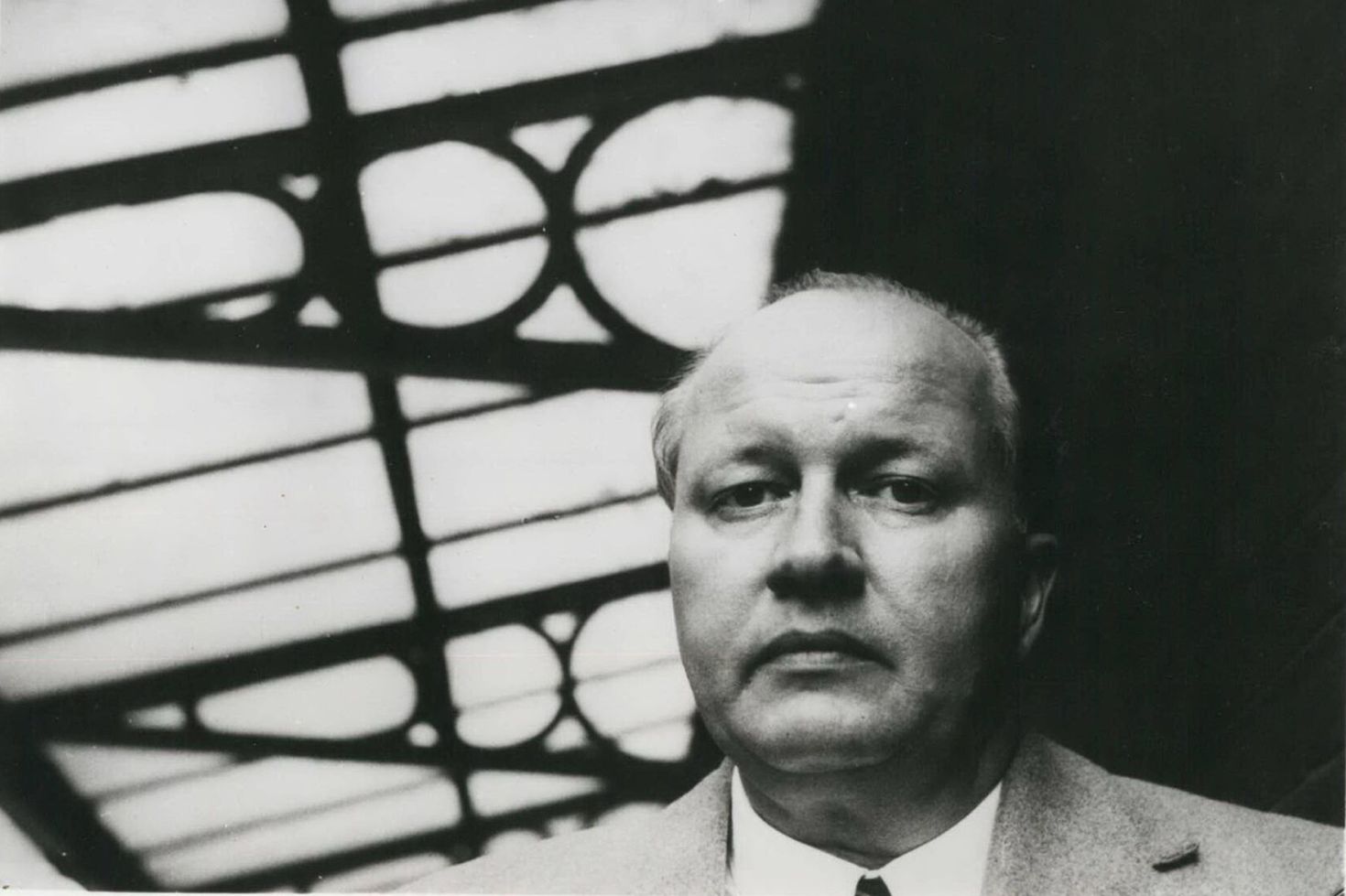
The Care and Handling of a Literary Widow, or Why I Didn’t Write Ted Roethke’s Biography
Jeffrey Meyers
In my book about mad poets, Manic Power: Robert Lowell and His Circle (1987), I described Ted Roethke’s life (1908-63), friendships and poetry. I was attracted not only to his witty lyrical verse, but also to his larger-than-life, bearlike character: his love of plants and flowers, sensitivity to children, huge appetite for food and drink, soaring ambition, competitive spirit (especially with Lowell), emotional intensity, bouts of sometimes self-induced mania and confinement in mental asylums. When I heard him read at Harvard in the spring of 1960, the huge blubbery man, despite all his public appearances, was still trembling with nervousness.
I thought Allan Seager’s biography The Glass House: The Life of Theodore Roethke (1968) was inaccurate, dull and unworthy of its subject. Seager had competed unequally with Ted as a writer and had become hostile to his former friend. He was also seriously ill with lung cancer when writing his book. I was pleased to discover, when we met, that Ted’s widow Beatrice agreed with me. But much as she disliked Seager’s book, I never managed to persuade her to help me write mine. But if I didn’t write Ted’s biography, Seager’s would remain the standard work on the subject.
Beatrice O’Connell (1926-2026), a tall slim Irish-American beauty and Ted’s student at Bennington College in Vermont, married him in 1953 and was celebrated in his love poems: “She was the sickle; I, poor I, the rake, / Coming behind her for her pretty sake / (But what prodigious mowing we did make).” They had no children and remained married, despite his alcoholism and emotional upheavals, until his fatal heart attack in a swimming pool in August 1963. In 1972 Beatrice married Stephen Lushington, a quiet, cultured English headmaster, a great contrast in every way, and great relief, from Ted. They lived in Hastings on the south coast of England; I was teaching in Colorado but went to London every summer, so I was able to see her several times. My friendship with Beatrice developed slowly and lasted for nearly two decades.
Beatrice sent me 10 letters and 5 Christmas cards (one of them about Auden teaching at Bennington) from 1981 to 1999. Increasingly friendly, her greetings ranged from Dear Professor Meyers to Dear Jeff; her sign-offs included Sincerely, Sincerely yours, With all the best, Fondly, Love to you and Val. She described her group tours to Greece and Turkey, trips to London and America, and failing health, especially her mastectomy and increasing blindness. Despite the warmth of her letters, she was understandably irritable and short-tempered during the last of my three visits to her.
My first letter stated my credentials and desire to write Ted’s biography. On October 23, 1981, Beatrice replied to this letter, condemned Seager’s book and added a caveat:
Shortly after Alan Seager had begun writing his biography of Thedore Roethke, I knew I had made a mistake to suggest it. I thought it should have been a scholarly work rather than a plot supported by contrived evidence. The proposing of that book was probably the greatest mistake I have made, costing me several years of unpleasantness and damaging both my reputation and that of Theodore Roethke. It would take a great deal of convincing for me to consider embarking on another.I am afraid I have to say that unless you are starting on a long-term project which would not be published for years—not, it would appear, your way of working—I can’t give you much encouragement.
Once bitten, twice shy.
Though she was still wounded and angry about Seager, I sensed the chance to pitch my Dantean plan and seduce the widowed Beatrice. On November 4, 1981 I wrote to her explaining how I would write Ted’s life:
It’s never too soon to begin a biography, for records are destroyed, papers disappear and vital informants perish. If we agree that I should go ahead with the Roethke biography, I could get a contract from Doubleday or Oxford. I’d then try to arrange a teaching exchange or visiting professorship at the University of Washington [where Ted taught] next academic year, so I could absorb the local atmosphere, talk to his old friends and study his papers in the library. I don’t expect to have your active cooperation, merely your passive encouragement: permission to quote his unpublished material, some conversations when I’m in England next summer and factual questions when the book is completed.
I also sent her a copy of my life of Katherine Mansfield and reviews of my Wyndham Lewis biography.
Warming up a bit the following August, she wrote on four sides of Indian decorated paper: “It was a great treat to have lunch in London with the Meyers. The lunch was delicious and the talk was lively too. I am so glad we had an opportunity to meet you before you departed for the States. Perhaps we’ll see you next year in England. I hope so.” When I was investigating the real young woman whom Ted wrote about in his great poem “Elegy for Jane,” Beatrice recalled that “Ted had come into class and said, ‘Where’s Jane?” to which the reply was that she was dead, that she had died when she was thrown from a horse—or perhaps fell off.”
Beatrice commented on Ted’s shocking behavior at Edmund Wilson’s Christmas party in December 1952. Rather fat himself, Ted squeezed next to Wilson on the couch, leaned over, grabbed one of Wilson’s jowls in his massive hand and cultivated the influential critic by remarking, “Why, you’re all blubber.” “Ted was ‘high’ shortly after we met, in December 1952,” she explained on November 20,1991. “His behavior at Edmund Wilson’s party is typical of his sick behavior. It was horrible for those close to him, but it could also be funny. However, he wasn’t always ‘high’ or manic or drunk.” She added, “it was a shame that analysts couldn’t see the patients when they were at home and normal, or when they were beginning to show signs of illness, rather than after they’ve gone berserk.” She also generously praised my Manic Power, said “I think it’s jolly good, and have been most impressed by your biographies, the latest of Conrad.” She’d recently met Iris Murdoch, who “was most enthusiastic about your books.”
Beatrice’s generous praise of my work on June 21, 1992—“You accomplish an incredible amount of travelling, teaching and writing, not only of books but also of articles, reviews and letters”—brought me no closer to the promised land. She said, “I want to write something about my life with Ted, but I don’t do it. I don’t know how to get started.” She also tried to correct Seager’s book, but never completed either project: “His last two chapters are a shambles. Poor Allan was dying and they seem an attempt to put something together from notes I’d given him.” Recalling that she and Ted had once rented the house of a famous northwest painter, she noted, “Fancy, Cal Lowell being snooty about Morris Graves’ house, which Auden called ‘the most beautiful house in America.’ ”
Her last message, an email of October 1991 said her previous emails to me had weirdly gone to her god-daughter in Lima, Peru. She’d made no progress in writing her memoir, and concluded: “Sorry to disappoint you. I may have liked the idea of your doing a biography of Ted twenty years ago, but I have never liked the idea of one based on medical files, like Diane Middlebrook’s on Anne Sexton.”
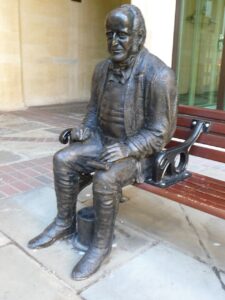
During our last phone call on December 16, 1998, I granted her permission to give my letters to her to the University of Washington Library. She said Ted’s sister June had died, when blind, aged 87, and that the local college had erected a statue of Ted. Contra Seager, Ted was not full of guilt about his father, but about his masturbation. Still unwilling to help me, she declared “I have a life of my own.” Her husband was no doubt weary of hearing about Ted, and Beatrice may have feared another emotional and distracting investigation would damage her marriage to Stephen. She never agreed to talk about her tumultuous years with Ted or allow me to obtain his fascinating psychiatric records, available only to his family. Since Ted’s sister June had also refused to cooperate—she’d even burnt all his papers—I could not obtain the new material essential to secure a contract from a publisher. Despite Beatrice’s warmth, generosity and friendship, she neglected to budge and repelled my assault on the biographical front. I eventually reached a dead end and was forced to abandon my long-sought project.
Jeffrey Meyers has recently published James Salter: Pilot, Screenwriter, Novelist and Parallel Lives: From Freud and Mann to Arbus and Plath (2024), Forty-Three Ways of Looking at Hemingway (2025) and The Biographer’s Quest (2026).


Be First to Comment