Published 4y ago - Evert Jan van Leeuwen
In “King Pest,” Poe’s understudied story contains a broader critique of the self-serving and autocratic governmental tendencies that Jackson had come to embody in the eyes of his opponents. More »
Published 4y ago - Dan Geddes
Satire in the Global Village By Dan Geddes[1] From the talk, “Satire in the Global Village” given at the Institute of General Semantics’ symposium on “Language and Reality” on October 3, 2015 at the Princeton Club in New York. First published in Anek... More »
Published 5y ago - Dan Geddes
Harold Bloom was America’s best known literary critic for at least 30 years. Reading Bloom’s books were often a guilty pleasure for me. He wrote effusively in superlatives about his favorite writers, the writers of the “traditional” Wes... More »
Published 5y ago - Dan Geddes
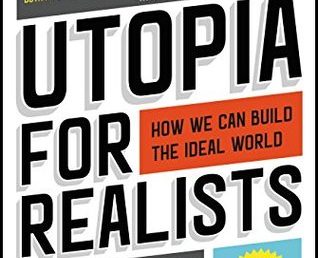
Utopia for Realists by Rutger Bregman (Translated by Elizabeth Manton) Review by Dan Geddes Rutger Bregman (Utopia for Realists) makes compelling arguments for the redistribution of the unprecedented wealth of the contemporary world. Bregman collects and prese... More »
Published 6y ago - Dan Geddes
Thomas Pynchon is one of the most influential and critically revered American novelists of his time. Pynchon’s verbal virtuosity, multi-dimensional erudition, and anarchic sense of humor have earned him the title of “bard of the counterculture.R... More »
Published 9y ago - Dan Geddes
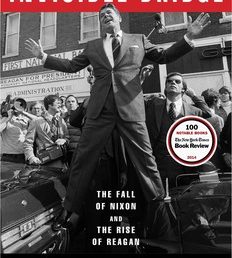
Rick Perlstein Review by Dan Geddes 13 March 2015 The Invisible Bridge is a guilty pleasure for those who enjoy 1970s nostalgia. It chronicles that time of serial debacle (1973–1976) between Watergate and the election of Jimmy Carter, an era when Americans w... More »
Published 10y ago - Dan Geddes
Dave Eggers 3 January 2014 Review by Dan Geddes The Circle, Dave Eggers’ novel named for a fictitious Google-like company that profits from its users’ data and destroys individual privacy, is a topical and compelling read. The story takes place in a... More »
Published 11y ago - Dan Geddes
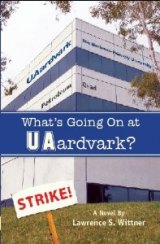
By Lawrence S. Wittner Review by Dan Geddes What’s Going On at Uardvark? is a satirical campus novel, one where the university is utterly dominated by corporate interests. Companies outbid each other to have the campus buildings named after them. “... More »
Published 11y ago - Dan Geddes
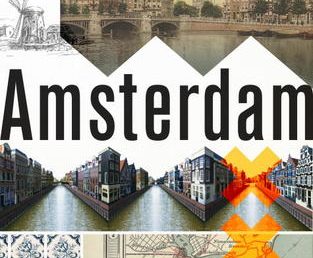
Review by Dan Geddes See also: The Island at the Center of the World The Dutch Republic The First Salute Russell Shorto’s Amsterdam: A History of the World’s Most Liberal City is such an enjoyable book in part because Shorto cherry-picks the most i... More »
Published 11y ago - Dan Geddes
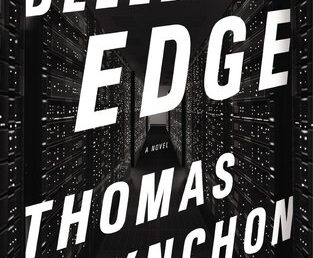
Essay by Dan Geddes See also: The Crying of Lot 49, Gravity’s Rainbow, Vineland, Inherent Vice, and Dys, an imaginary Pynchon novel Most Thomas Pynchon fans will not be disappointed by Bleeding Edge, his new novel set in New York in 2001. Some may be dis... More »
Published 11y ago - Dan Geddes
Clark Casey Review by Dan Geddes Clark Casey’s The Perfect Defective is a hilarious short novella, an enjoyable beach read if your sense of humor includes ribald parody of the LA private detective genre. Aside from the Spade or Marlowe associations, some... More »
Published 12y ago - Timothy Hurley
Review by Timothy Hurley When I retired after thirty-five years of medical practice my friends said I had to have a plan. They said I’d be dead in a month if I had no plan. I didn’t work thirty-five years to die in a month. So I decided to take a hu... More »